


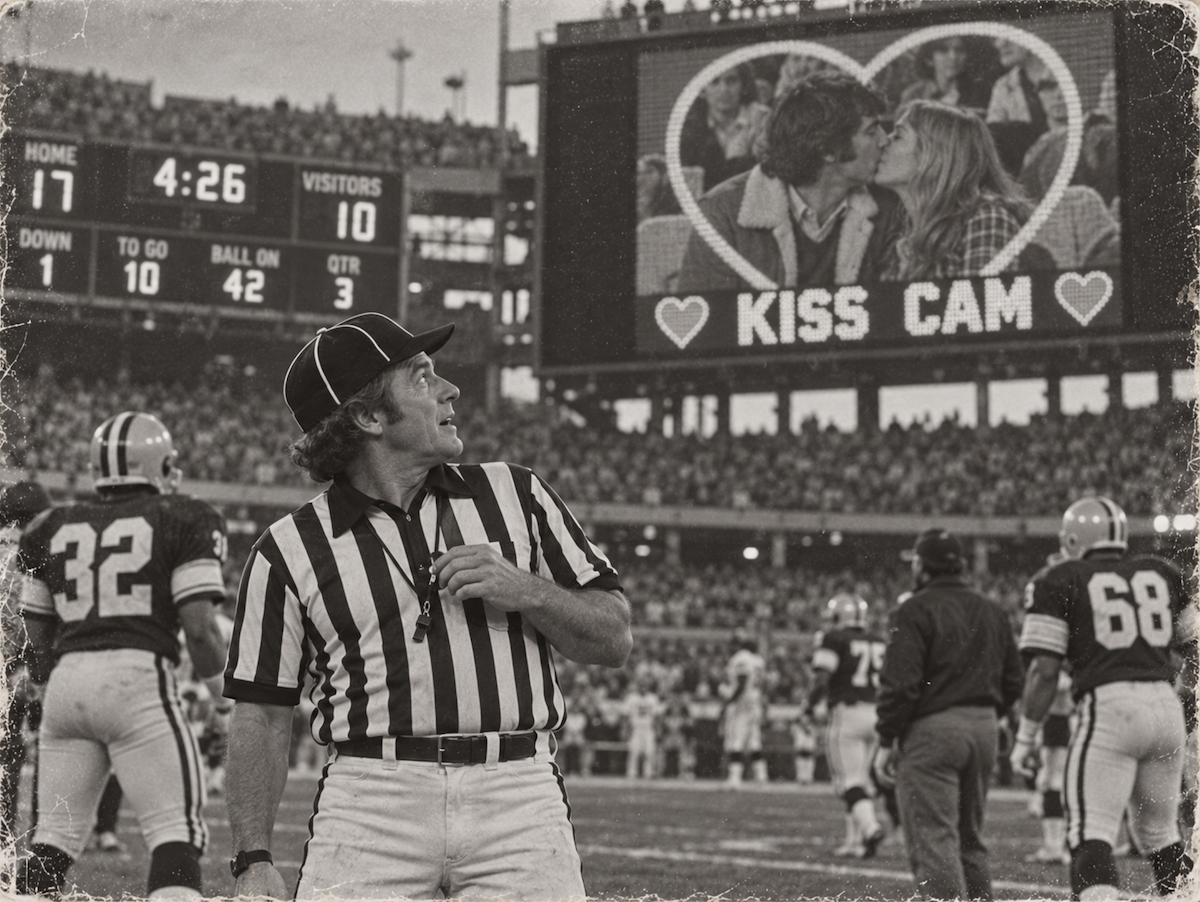
The Crowd Is Skimming
Watch how people consume the world now and you'll notice something a little unsettling. They read the headline, not the story. They catch the score, not the game. They scroll for the thing that confirms what they already believed and keep moving the instant something asks them to slow down and think. We've drifted into a "click first, think later" reflex — react, share, move on, the processing optional.
I'm not here to scold the crowd for it. The crowd is human, the feed is engineered to be bottomless, and people are tired. But if you're marketing to that crowd, you need to see the situation clearly, because there are two ways to play it — and one of them is a foul.
The Foul: Renting Outrage and FOMO
The easy play is to feed the reflex. If people only read headlines, write headlines built to detonate — outrage, fear, the cliffhanger that withholds the actual point. And the sharpest lever in that toolkit is FOMO, the fear of missing out. "You won't believe." "Everyone's switching." "Don't get left behind." It's the cheapest click in the building, because it bypasses thought entirely and goes straight for the twitch.
It works — for exactly as long as it's novel. Here's the trap. An audience trained on FOMO and bait builds a callus. The first shocking headline gets the click. The hundredth gets an eye-roll. To keep the same response, you have to keep escalating, shouting louder, manufacturing bigger emergencies — and somewhere in that arms race the audience simply stops believing you. You didn't earn attention. You strip-mined it, and now the seam is dry.
Attention is the only currency your audience can't print more of. Spend their trust to grab it, and you've taught them to look away.
The Real Resource You're Spending
Reframe the whole thing and the right play gets obvious. Attention isn't something you're entitled to take. It's a scarce resource the audience is choosing, against enormous competition, to lend you for a few seconds. Treat each of those seconds as borrowed and the cheap tricks start to look like what they are — a bad trade. You grab three seconds today and forfeit the next three hundred, because you taught them your name means a letdown.
The teams that win the long game respect the scarcity. They earn the click with a real promise and then — this is the part the foul skips — they keep it. The headline points at something true, the something true is actually worth the time, and the reader walks away feeling smarter instead of tricked. Do that consistently and you build the rarest thing online: an audience that opens your stuff on sight, because experience taught them you're worth the slowdown.
How to Run It Monday
Pull your best-performing headline from last month and ask the honest question: did it earn the click with a real promise, or rent it with manufactured FOMO? Then read what was on the other side. If the payoff matched the hook, run it back — that's how you earn the slow-down. If the click outran the substance, you borrowed attention you didn't repay, and the bill comes due as fatigue. Aim for the headline that's both irresistible and true. They exist. They're just harder than the cheap one, which is exactly why they keep working.
The Ref's Call
Yellow flag on the play. Exploiting the click-first reflex with FOMO and bait isn't an ejection — it's legal, and it'll even pad your numbers for a while. But it leads straight to Rule 27, Audience Fatigue: the callus builds, the trust erodes, and the attention you strip-mined stops coming back. Respect attention as the scarce, borrowed resource it is. Earn the click, keep the promise, and your audience will keep lending you their seconds.