


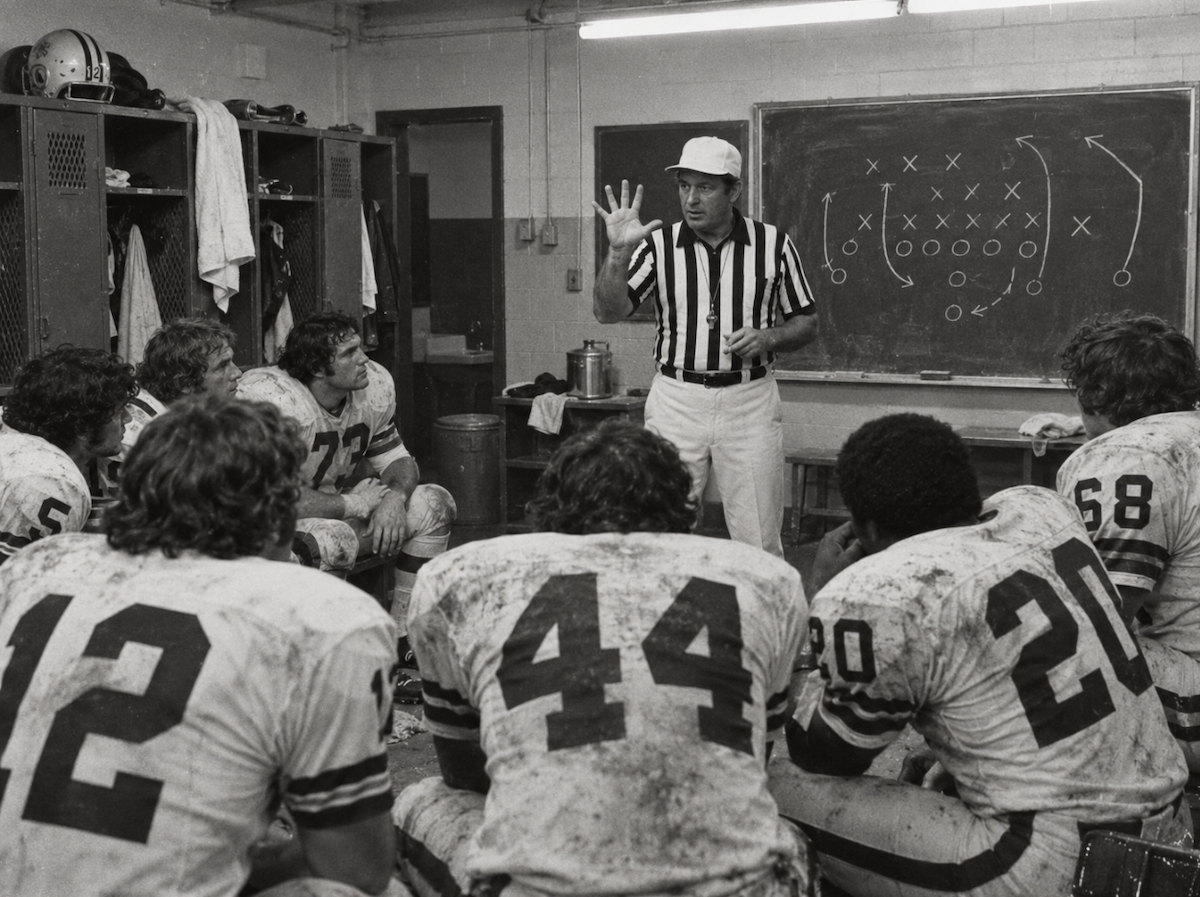
A Tougher League, Not a Different Game
When competition heats up, owners often act like the rules changed. They did not. A competitive market is not a different sport — it is a tougher league. The fundamentals that win in a weak field are the same ones that win in a strong one; the strong field just punishes you faster for skipping any of them. You do not need a trick play. You need a complete roster.
So here is the starting lineup. Five positions every business has to fill to compete when the league gets hard. Miss one and you are playing a man down — and in a competitive market, a man down is a loss.
One: A Game Plan
Everything starts here, which is exactly why everyone skips it. A game plan is the simple, written answer to where you are going and how. Not a hundred-page binder — a clear decision about what you are trying to win, which plays you will run to win it, and which you will not run at all. In a soft market you can wing it. In a competitive one, the team without a plan gets read like an open book by the team that has one.
The whole roster below depends on this position. Skip it and the other four players have nothing to organize around.
Two: A Defined Audience
You cannot run a play if you do not know who you are playing. "Anyone who needs us" is not an audience; it is a wish. A defined audience is a specific person with a specific problem you are uniquely good at solving. The narrower and clearer that picture, the sharper every other decision gets — your message, your channels, your offer all snap into focus.
Trying to appeal to everyone is the fastest way to be the obvious choice for no one. In a crowded league, the team that knows exactly who it is for beats the team that is vaguely for everybody.
You cannot game-plan for an opponent you refuse to name. Pick who you are playing.
Three: A Clear Value Message
Once you know who you are for, you have to tell them why you, in words they actually receive. A clear value message names the problem you remove and the result you deliver, in the customer’s own language, fast enough to land before they look away. This is the position most businesses fumble — they describe their features instead of the customer’s outcome and assume the buyer will do the translation. The buyer will not. The buyer will move on.
In a competitive market your message is doing double duty: it has to communicate value and out-clarify the competitor saying something similar. Clarity is the edge most teams leave on the table.
Four: A Way to Keep Score
Winners keep score. A business with no scoreboard is a team that plays the whole season without checking whether it is winning, then acts surprised at the standings. You need objective measurement — what is working, what is not, which plays earn their place and which just feel productive. Data is where you keep score, and in a connected economy you have more of it available than any team in history. Use it.
This is not about drowning in dashboards. It is about picking the few numbers that actually tell you whether the plan is working, watching them honestly, and letting them — not your gut, not your mood — decide what you run next week.
Five: A Coach
The last position is the one owners resist most, and it is the outside eye. A coach is someone who is not on the field, who can see the play the way you cannot when you are in it. That is the entire reason coaching exists in every serious sport — the player closest to the action has the worst view of it. An outside marketing authority can hear your message like a stranger does, call the foul you are too invested to see, and treat the business as it should become rather than as it is today.
You can be the best player on your own roster and still need a coach. The two are not in conflict. The coach is how a great player becomes a winning team.
How to Run This Play Monday
Walk your own roster and grade each position honestly. Do you have a written game plan, or a vibe? A defined audience, or "everyone"? A clear value message, or a list of features? A real scoreboard, or a hopeful glance at revenue? A coach, or a mirror? Whichever position is emptiest is where the competition is going to attack you first — so that is where you start.
Fill them one at a time. You do not field a championship roster in a weekend. You field it by refusing to play any position empty.
The Ref’s Call
Clean play — keep running it. Building the full starting lineup before you step into a competitive league is exactly the discipline that wins, and the whole roster organizes around Rule 1, No Game Plan. A plan, an audience, a message, a scoreboard, and a coach. Fill all five and the tougher league stops being a threat and starts being where you separate from the field.