


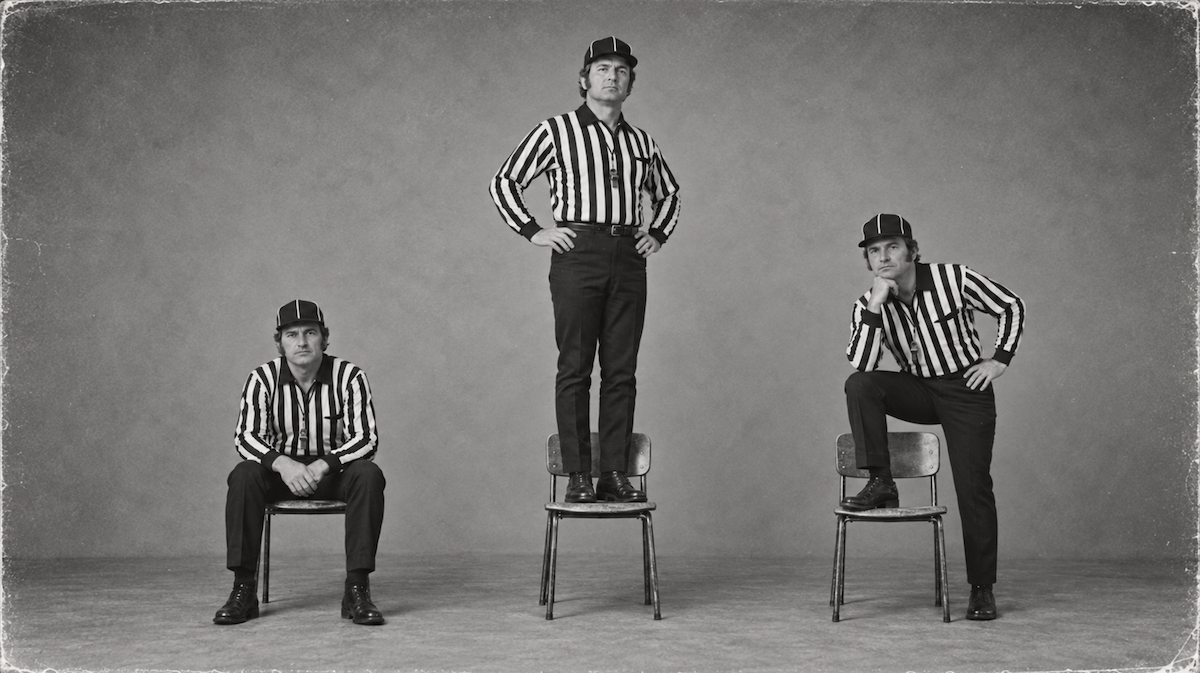
A Chair Is Only a Chair If You Sit on It
Look at a chair. We call it a chair, but that name is a lie of convenience. The moment you stand on it to change a light bulb, it is a step ladder. Set a plate and a drink on it and it is a table. The object never changed — your need did. A thing is not defined by what it is. It is defined by what it does for the person using it, right now, for the problem in front of them.
Marketers forget this constantly. They describe what their product is — its features, its specs, its category — and assume the customer will figure out what it does for them. But the customer does not buy what a thing is, they buy what it does, it’s utility. And what it does depends entirely on the problem they walked in with.
As the famous example goes - people don’t buy drills, they buy holes in their wall - the drill is the means. The marketing phrase often attributed to Harvard Business School professor Theodore Levitt—means that customers do not buy products for the sake of owning them; they buy them to solve a problem or achieve a result - you guessed it - the utility.
Your Ad Is Whatever the Customer Needs It to Be
Here is the move that flips everything. Your ad, your page, your product — none of it is defined by what you built. It is defined by the utility the customer assigns it. To the right buyer at the right moment, your ad is not an ad. It is a solution. It is the answer to a problem they were already carrying around.
So the question is not "what did we make?" It is "what does this become in the customer’s hands?" The same product is a time-saver to one buyer, a status signal to another, and a risk-remover to a third. The product did not change. The utility did, because the need did. When you lead with what you built, you make the customer do the work of figuring out which of those they are buying. Lead with the utility and you have already handed them the reason.
The customer does not buy the chair. They buy the sitting, or the reaching, or the table they suddenly needed it to be.
The Foul: Feature Creep
The trap is feeling like more features means a stronger pitch. So the page swells with capabilities, specs, and everything the thing can technically do — and the customer drowns. They did not come for a catalog of features. They came with one problem, and you buried the one utility that solves it under nineteen that do not apply to them.
That is Feature Creep: confusing the size of the feature list with the strength of the offer. More features do not clarify the value; they dilute it. The customer cannot find the chair-becomes-ladder moment that matters to them because you described all forty possible uses with equal weight. Lead with the single utility that solves their problem, and let the rest support it instead of smothering it.
How to Run This Play Monday
Take your main message and find the verb. What does the customer actually do, or stop having to do, because of you? That outcome is the utility, and it belongs at the front — before the features, before the specs, before the clever category name. If your headline names what the product is instead of what it does for them, rewrite it.
Then map the few different problems your buyers arrive with, and recognize that the same product is a different solution to each. Speak to the utility that matters to the buyer in front of you, lead with that, and let the feature list become the proof underneath — not the pitch itself.
This is classic Apple strategy - drop the speeds and feeds and focus on what you can do. Watch any commercial - it’s about the great photos you can take or something similar.
The Ref’s Call
Clean play — keep running it. Defining your offer by the utility the customer needs — leading with the solution rather than the feature list — is exactly the discipline that makes an ad land, and it is the cure for Rule 7, Feature Creep. A chair becomes a ladder when someone needs to reach. Your ad becomes a solution the moment you lead with what it does. Name the utility first, and let the features hold it up.