

the film room & ref breakdown
Instant replay analysis, ethical rulebook amendments, and expert coaching on the field of marketing strategy.

Two Ways to Change Behavior: Manipulation or Inspiration
There are only two ways to move a customer to act: manipulate them or inspire them. Both work in the short term. Only one builds a business that compounds.

Gimmick: The Word That Lost Its Meaning
Gimmick once meant a hidden trick. Now it is a lazy insult and a lazy crutch. Here is when a clever idea earns the name and when it crosses into a foul.

Is Your Ad a Solution? Things Are Defined by Their Utility
A chair becomes a ladder or a table depending on what you need from it. Your ad is whatever solves the customers problem. Lead with the utility, not the features.

Five Things Every Business Needs in a Competitive Market
A competitive market is a tougher league, not a different game. Here is the starting lineup every business needs: a plan, an audience, a message, a scoreboard, and a coach.

Catering to the Lowest Common Denominator
Dumbing it down so everyone feels successful is easier than raising the game. But the audience you flatter is the audience you lose. Respect their intelligence.

Why Experts Need Marketing
Being the best at your craft means nothing if no one knows. Expertise without a clear value signal is the league MVP nobody ever scouted. Here is how to fix it.
The Attribution Dilemma: When Your Sources Split Overnight
Just when you've mapped every touchpoint, a source splits in three and your history breaks. Tracking gets messier before it gets cleaner. Here's how to officiate the chaos.

Three Biases Quietly Sabotaging Your Marketing Decisions
Even with good data, the ref's own eyes can deceive him. Confirmation bias, recency bias, and the small-number fallacy quietly skew the calls you make every week.

Speak the Language of Your Customer
Meet customers in their own words. 7UP could not sell a clear soda until it borrowed the language people already knew and became the Uncola. Speak their dialect.

SEO Without Intent: Ranking for Words Nobody Searches to Buy
A number one ranking for a word nobody buys on is a hollow win. Here is why intent beats rankings, and how SEO history proved it the hard way.

Data Literacy: Reading the Story Your Numbers Are Telling
Anyone can read a number. Few can read what it means, and fewer still notice when the feed itself is broken. Data literacy is the skill that separates the two.

Marketing Tricks: The Manipulation Playbook (and Why to Retire It)
Fake oops emails, scare-tactic account notices, free that just means give-us-your-email, recall-to-upsell. The dark tricks work once. Then they cost you everything.
The Frame Problem: Things in Your Way vs. Things on Your Way
The world is made of things in your way and things on your way. Most marketing problems are the second kind wearing the costume of the first. Reframe them.
Understanding Paid Campaign Strategies: Picking a Bid Strategy by Goal
Every paid campaign needs a defined role. Here is how to match your bid strategy and targeting to the goal so each one earns its spot on the roster.

The Measurement Problem: Why Some Wins Resist Counting
Some of your most valuable plays resist a clean number. The temptation is to ignore what's hard to measure. The discipline is to measure it badly rather than not at all.

Hunches Are for Starts, Not Growth
Your gut gets you off the line. It cannot sustain the drive. Founders who scaled on instinct keep coaching on instinct long after the data should have taken the wheel.

Box Scores and Dashboards: Reading Your Marketing Stat Line
A dashboard is a box score. The trouble is most of them list every stat and tell no story. Here is how to build one that reads like the game actually played out.

Single-Channel Dependency: Don't Build Your House on Rented Land
One algorithm change can end your season. Here is why betting your whole business on a single channel is a red flag, and how to spread the risk.

Mercedes and the 30-Year Sale: Marketing for a Customer You Don't Have Yet
I don't advertise to sell cars today. I want to sell cars 30 years from now. One line that explains brand patience, lifetime value, and the play most teams won't run.

Maximizers vs. Satisficers: Who Are You Really Selling To?
Maximizers hunt the best option; satisficers want good-enough right now. Sell to the wrong one and your best pitch falls flat. Here is how to tell which buyer you are playing.
Marketing Is Not a Do-It-Yourself Activity
Founders stacking tools without a strategy are reffing their own game. Here is why marketing resists DIY, and where the real outside eye earns its keep.

Click First, Think Later: Marketing to a Distracted Audience
People read headlines, not stories. They scroll for confirmation, not truth. You can exploit that with cheap FOMO, or respect attention as the scarce resource it is.
Consent Mode and Enhanced Conversions: Tracking Without Breaking Trust
You can measure responsibly without breaking customer trust. Consent Mode and Enhanced Conversions let you keep the scoreboard honest the clean way.

The Size of Your Funnel: Shallow V, Deep V, and the U
Shallow V, deep V, or U - the shape of your funnel decides how many fans you keep. Here is how to design more ways for visitors to engage and convert.

First-Party Data Is the New Home-Field Advantage
The team that controls its own field wins. Owning customer data through checkout and signups is the advantage no algorithm change can take away.

The $9 Problem: When Price Sets the Expectation
Once a fast-food meal or a loaded coffee crosses the $9 line, the customer’s tolerance changes. The price sets an expectation — and now the order has to be perfect.

Being Safe Is Risky
Playing not to lose is the surest way to lose. Bland, safe creative is the real risk, because invisible is worse than wrong. Ask 7UP what bold positioning bought them.

Marketing Is Selling. Your Sales Should Be Closing.
A century ago, Claude Hopkins argued that advertising is salesmanship in print — measured by results, not applause. If your marketing isn’t selling, it’s just decoration.

The Rebate Trap: How Constant Deals Train Customers to Never Pay Full Price
Menards-style perpetual rebates feel like a win every week. But you are training your best customers to never pay full price again. It is a downward spiral.

Measure Everything, Analyze Little
Collecting data is easy and cheap. Reading it is hard and rare. When nobody owns the dashboard, you get a beautiful library of charts that never changes a single decision.

The Reviews Game: Why Gartner and Capterra Aren't Neutral
Gartner, Capterra, GetApp, SoftwareAdvice. They look like neutral referees of software. The ones who pay get the better seats. Here is how the reviews game works.
Data Is Like Money
Those who can track it, manage it, and understand it win. Marketing data behaves exactly like money — and most organizations are treating theirs like loose change.

How to Negotiate With Leadership for Marketing Budget
Walking into a budget meeting on conviction alone is a loss. Here is how to make the data-backed case for spend, channels, and direction, and let the scoreboard argue for you.

Emails That Go to Junk: Winning the Inbox
You won the signup and then watched every email land in junk, unread, auto-deleted. The conversion was the start of the play, not the end. Here is how to finish it.
The Four Myths That Stall Business Growth
Four quiet myths stall more businesses than any competitor: not wanting to grow, leaning on referrals, figuring it out, and doing everything yourself.

Do You Want a Landscaper or a Gardener?
A landscaper does a one-off job and drives away. A gardener cultivates across seasons. Marketing that lasts is gardening, not a single dramatic install.
Michelin's Guide: Selling More Tires by Sending People Away
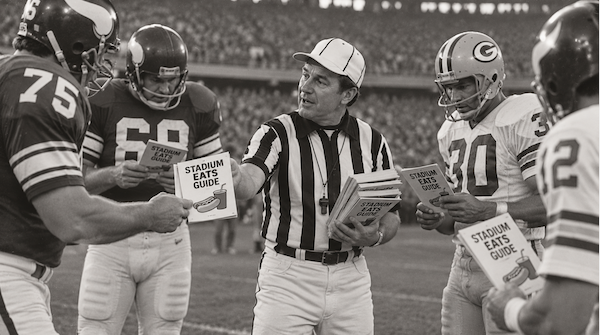
A tire company built the world's most prestigious restaurant guide. Not to sell guides, but to get people driving until their tires wore out. The long game, perfected.

Cookies Explained: First-Party, Third-Party, and What's Actually Changing
A plain-English rulebook on cookies, consent, and privacy. What lives on the user, what lives on the business, and what is actually changing.

The Cookieless Future: How to Get Your Team Ready Today
The third-party cookie is leaving the field. Here is the Refs prep plan so your measurement does not fall apart when the whistle finally blows.

Paid Helps Organic, Organic Helps Paid
Paid and organic are not rival squads, they are running the same offense. Here is how each unit feeds the other when they share the playbook.
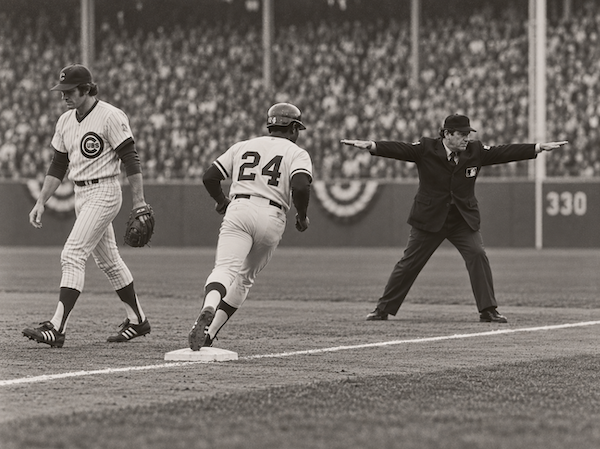
On-Base Percentage for Marketers: Stop Counting the Wrong Hits
Batting average only counts hits. On-base percentage counts every way you reach base. Your marketing has both kinds of stat, and you're probably tracking the wrong one.

Winners Keep Score
Nobody plays a game that doesn't keep score. Yet plenty of marketing teams run for years with no objective measure of winning. That's not humility. That's losing.

Value Over Replacement: What Sabermetrics Teaches About Marketing Spend
Sabermetrics asks one question that should haunt your media plan: how much is this channel worth above a freely available replacement? Here is how to measure it.

SEO Is Like Baseball: Working Your Way From the Minors to the Majors
Google wants the best team on the field. Here is how technical SEO gets you to the Minors and fans, conversions, and links call you up to the Majors.
Consumer Surplus: The Money You Leave on the Table
Consumer surplus is the gap between what a customer would have paid and what they actually paid. Smart pricing closes that gap — and Uber turned closing it into a science.