


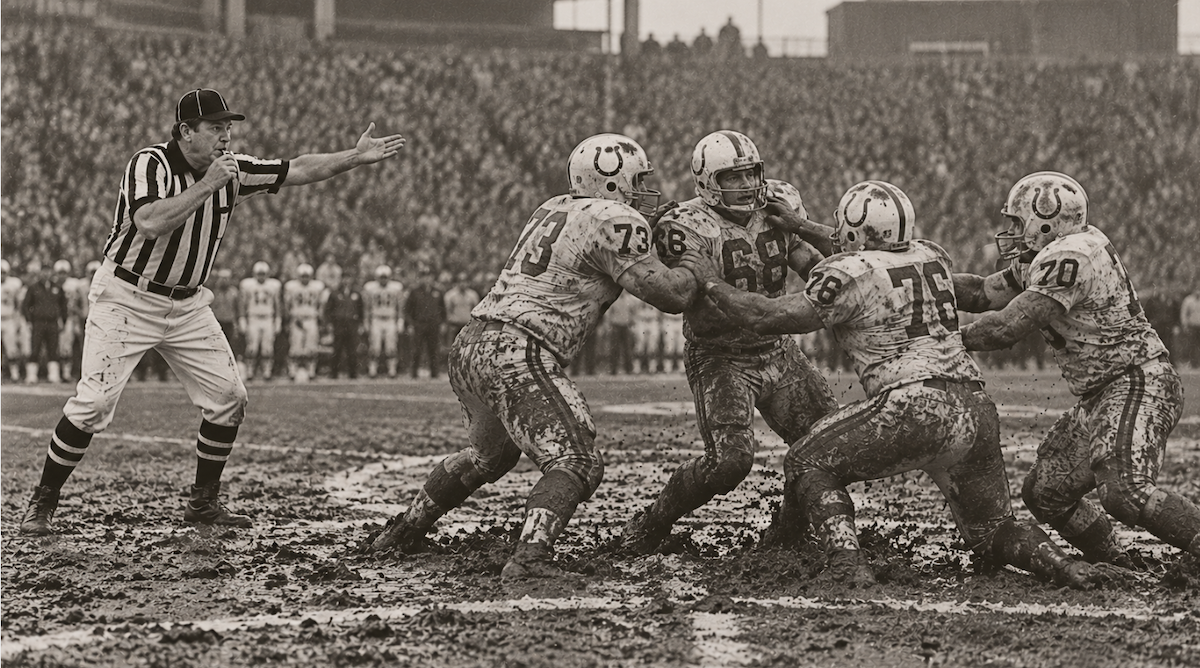
The Team That Beats Itself
The most frustrating loss in sports is not getting outplayed. It is the team that beats itself — penalties, missed assignments, drives that stall in the red zone for no reason a scout could point to. The other side barely had to show up. That is how most businesses stop growing too. Not run over by a competitor. Stalled by a few quiet beliefs they never put on the film and reviewed.
I have blown the whistle on these four more times than I can count. None of them feel like mistakes. They feel like wisdom. That is exactly what makes them dangerous. Let’s run the tape on each.
Myth One: You Do Not Actually Want to Grow
Plenty of owners say they want growth and then flinch at every move that would cause it. Growth means more people, more complexity, more risk of the thing breaking. So they quietly choose stability and call it contentment. That is a legitimate choice — but only if you make it on purpose.
The foul is pretending. You tell the team, the market, and yourself that you are driving for more while every actual decision protects the status quo. Mixed intent like that stalls everyone around you, because they cannot tell whether to push or hold. Decide honestly: are you playing to grow, or playing to keep what you have? Both are valid. Faking one while living the other is not.
Myth Two: Referrals and Repeat Business Are Enough
This one feels great right up until it does not. Word of mouth is real revenue and a sign you are doing good work. But referrals are not a growth engine — they are a thank-you note. They arrive on the customer’s schedule, not yours, and they cannot be scaled, scheduled, or counted on for next quarter.
Referrals are a wonderful tailwind. No serious team builds its season around hoping the wind keeps blowing.
Building your whole business on referrals is like a team that only scores on broken plays. Thrilling when it happens, impossible to game-plan around. The moment a key referrer retires, moves, or simply gets busy, the pipeline goes quiet and you have no system to turn back on. Repeat and referral business should sit on top of a deliberate engine, not stand in for one.
Myth Three: You Will Just Figure It Out
The scrappy founder figured out the product, the first sales, the early hires — so the assumption is that marketing and growth will yield to the same improvisation. Sometimes it does, for a while. Then the business gets big enough that "wing it" stops scaling, and the same instinct that built the company starts capping it.
This is the No Game Plan foul. Winging it is not a strategy; it is the absence of one with a confident voice. The market does not reward improvisation indefinitely. It rewards a clear answer to who you serve, what you promise, and how you will measure the result — written down, not carried around in one founder’s head where it changes with the weather.
Myth Four: You Do Everything Yourself
The owner who touches every task believes they are the safeguard of quality. Often they are also the bottleneck. When growth depends entirely on your personal hours, you have built a business with a hard ceiling: yourself. There are only so many plays one person can run before the clock beats them.
Doing everything is not discipline. It is a refusal to build a roster. The work of growth — the strategy, the marketing, the measurement — needs hands and eyes that are not yours, including some that can see the parts of the game you are too close to. A head coach who insists on playing every position does not win. They just get tired and lose anyway.
How to Run This Play Monday
Take the four myths and grade yourself honestly on each. Be specific.
- Intent: Is every real decision aimed at growth, or quietly protecting what you have? Pick one on purpose.
- Engine: If referrals stopped tomorrow, what deliberate system would still bring you customers? If the answer is "nothing," that is your project.
- Plan: Can you write who you serve, what you promise, and how you keep score in three plain sentences?
- Roster: What are you doing yourself today that someone else should own so you can coach instead of play?
You do not have to fix all four this week. You have to stop pretending they are not on the film.
The Ref’s Call
Yellow flag on the play. None of these four myths is fatal on its own, but together they stall more drives than any competitor — and every one of them traces back to Rule 1, No Game Plan. Name the myth you are living, write the plan you have been improvising, and build the roster that runs it. The team that stops beating itself is suddenly very hard to beat.