


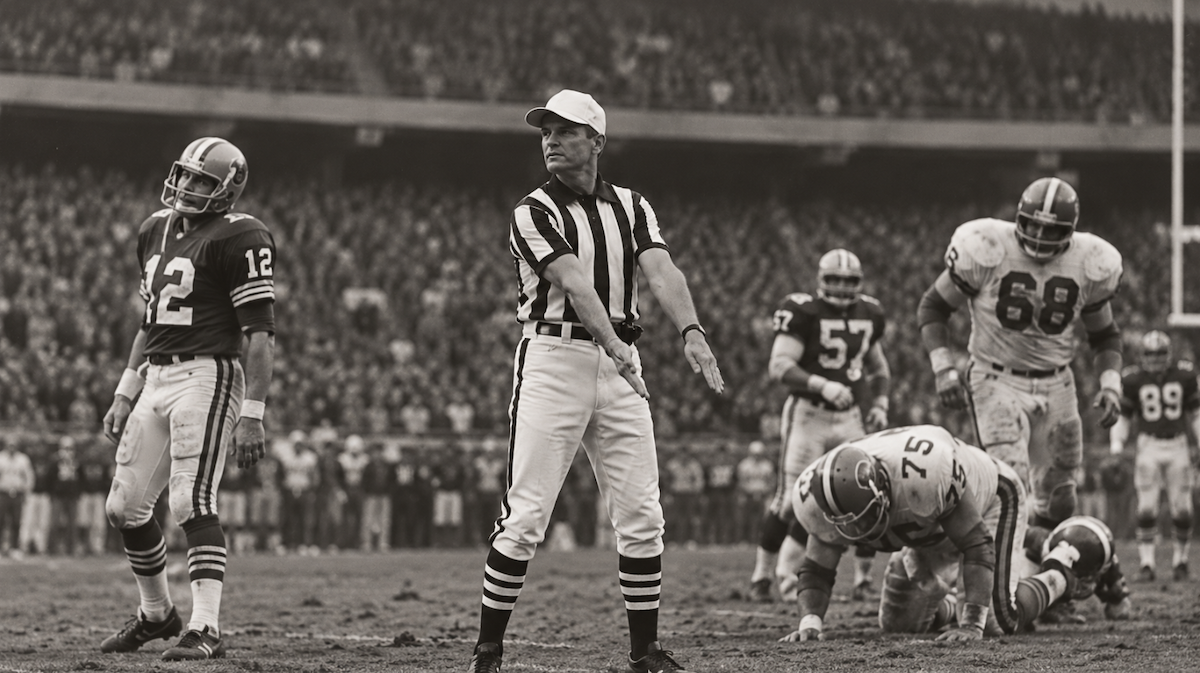
The Snap Count
On the opening snap, instinct wins. The play breaks down, the pocket collapses, and the quarterback doesn't run a regression — he feels the pressure and improvises. That instant read is a gift, and early in a drive it's often all you've got. No data, no time, just feel.
Businesses start the same way. A founder feels a gap in the market, trusts a hunch about a message, and moves before anyone could've proven a thing. That instinct gets the company off the line. It's a real strength and I'd never tell you to throw it away.
But here's the foul I see again and again. The same gut that got you off the line is still calling every play in the third quarter — and a hunch that launched the company is now quietly stalling its growth.
Hunches Are for Starts, Not Growth
That's the rule, and it's worth saying flat: hunches are for starts, not growth. Instinct is built for the moment before you have information — the cold open, the first move, the bet no spreadsheet could've made for you. It is genuinely good at that. It is genuinely bad at the next part.
Because growth isn't one heroic improvisation. It's a long drive — dozens of small calls, repeated, refined, compounded. And on a long drive, the gut runs out of road. It can't remember which version of the ad actually converted last quarter. It anchors on the one campaign that happened to work and ignores the ten that didn't. It can't see the slow leak in the funnel, because slow leaks don't feel like anything. The very instinct that was an edge at the snap becomes a blindfold over a full season.
Trust your gut to start the drive. Hand it to the scoreboard to sustain one.
What Data Does That Gut Can't
Data isn't smarter than your instinct — it's just better at the boring, repetitive part. It remembers every play, not the memorable ones. It doesn't get attached to the campaign you're proud of. It catches the gradual decay that no single moment reveals. It lets you compare ten versions honestly instead of crowning the one you happened to like.
That's not a replacement for the founder's feel. It's a partnership. Gut sets the hypothesis: "I think this audience will respond to this angle." Data settles it: it did, or it didn't, and here's by how much. Instinct without measurement is guessing on repeat. Measurement without instinct is paralysis. Growth needs the handoff between them.
Make the Handoff
The move is to notice which quarter you're in. For a brand-new bet with no history, run on instinct — that's the snap, trust it. But the moment a play is repeating — a channel you fund every month, a message you're scaling, a budget you're growing — that decision belongs to the scoreboard, not the hunch.
So put a number on the repeated calls. Before you scale the thing your gut loves, define what success looks like and check whether it's actually hitting. Let instinct keep its job — starting drives — and let data take the one it's built for: sustaining them. That handoff is the whole difference between a hot start and a team that's still winning in the fourth quarter.
The Ref's Call
Yellow flag on the play. Running your growth-stage decisions on gut feel — when the plays are repeating and the data is right there — is a Rule 16 foul, No Scoreboard. It's not a flag on starting with instinct; that's a strength. It's a flag on never making the handoff. Trust the hunch to get off the line, then put a real score on every repeated call. Make the handoff and keep driving.