


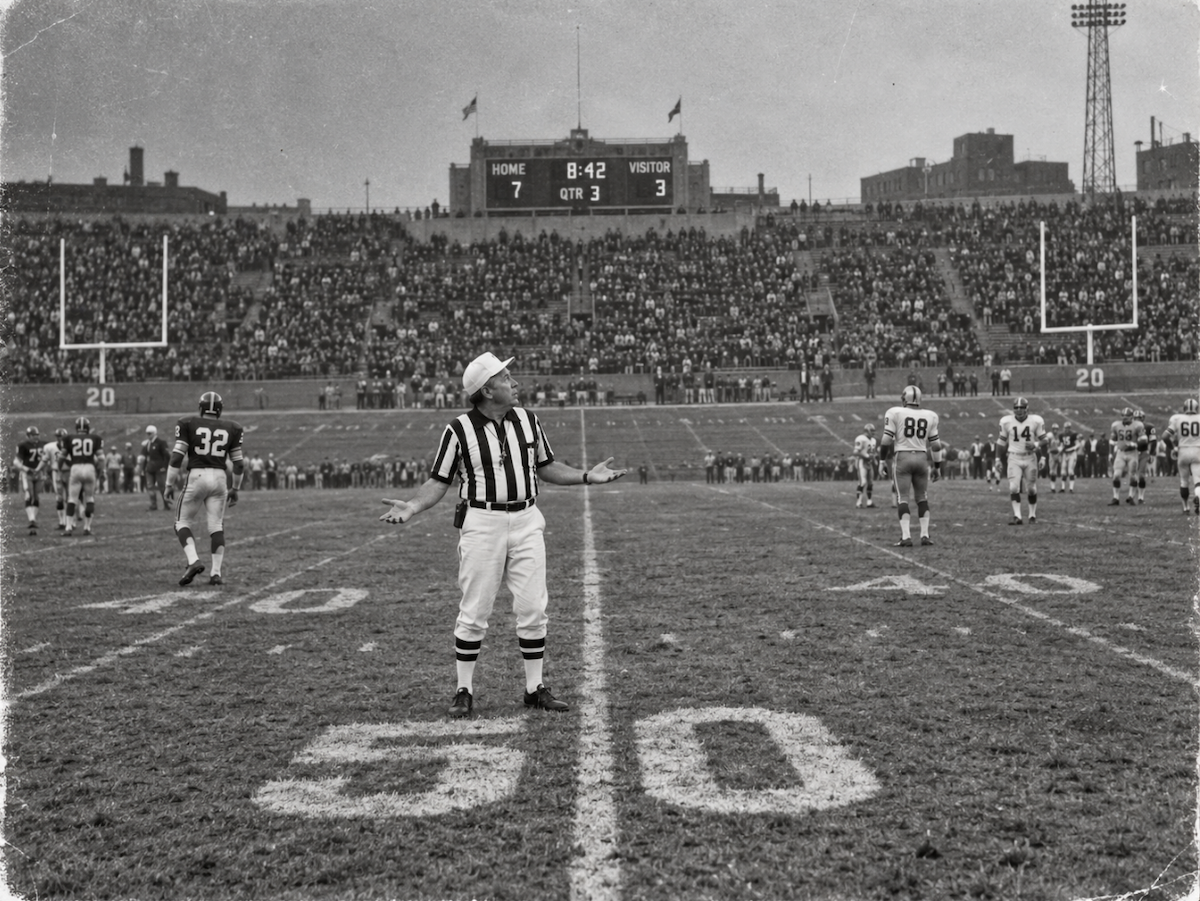
The Rulebook Changed Mid-Game
Imagine officiating a game where, at halftime, the league quietly redraws the lines on the field. The end zone moves. A rule you've enforced all season now means something else. Every call you made in the first half still happened — but you can't cleanly compare it to the second half anymore, because the field itself changed underneath you.
That's the attribution dilemma, and it's not hypothetical. Just when you've finally mapped your customer's touchpoints and trust your numbers, the ground shifts. A source you've tracked for years splits into three. The lines move, your history breaks, and the comparison you relied on stops being apples to apples. This is a real flag, and it's one of the most disruptive ones on the field.
One Source Becomes Three
Here's the textbook case. For years you tracked traffic and conversions from Capterra — one clean source, one row in your report, one trend line you understood. Then it splits. Capterra, GetApp, and Software Advice become three separate sources where there used to be one. Overnight, your single, reliable line fractures into three smaller ones.
Nothing about your actual performance changed. The same buyers are finding you the same ways. But your data tells a different story now: three modest sources where there was one strong one, a history that no longer lines up, and a quarter-over-quarter comparison that's quietly broken. If you don't know the split happened, you'll "discover" a decline that's pure accounting fiction — and maybe cut a channel that was doing just fine.
And this isn't a one-time freak event. Platforms split, rename, merge, and re-categorize constantly. It is the normal weather of attribution, not the exception.
Tracking Goes Uphill From Here
Let me be straight with you, because this is the part teams don't want to hear. Tracking is going uphill — and it's going to get messier before it gets cleaner.
Customers move across more devices than ever, so a single person looks like three. They cross browsers and apps that wall off the signals you used to rely on. Privacy changes keep tightening what you're allowed to see. Sources keep fragmenting. Every one of these chips at the clean, end-to-end view of the customer journey we all wish we had. If your strategy depends on perfect attribution, your strategy depends on something that's actively eroding under your feet.
Stop chasing perfect attribution. Chase a consistent method you can trust when the field moves.
This is why I throw a red flag at teams who bet everything on flawless tracking. It's not coming. The winning move isn't a more perfect map of a field that won't hold still — it's a consistent method that still tells you something true when the lines get redrawn.
Run the Play That Survives the Chaos
You can't stop the field from moving, but you can officiate it. The play here is consistency and control over precision.
Lean on the signals you own. UTM parameters are the closest thing you have to drawing your own lines on the field — you control them, they don't vanish when a platform reshuffles, and they let you tag traffic on your terms instead of trusting someone else's labels. Build a strict, documented UTM convention and enforce it like a rulebook, because a UTM scheme everyone improvises is worse than none at all. Track link clicks and first-party events you can stand behind, rather than borrowed metrics that change definitions without warning.
Then pick one attribution method and hold it steady. A "good enough" model applied consistently beats a "perfect" model you swap every quarter — because the whole point of a scoreboard is comparing like to like over time, and you can't do that if you keep changing how you keep score. And keep a changelog: when a source splits or a platform renames itself, write down the date. That one note is the difference between understanding a shift and panicking at a phantom decline.
Aim for directionally true and consistently measured. That's an attribution practice that survives the league redrawing the lines at halftime.
The Ref's Call
Red flag on the play. Betting your decisions on perfect, never-changing attribution — with no agreed method and no record of when the field moved — is a Rule 19 foul, No Attribution Agreement, and it's a serious one. When a source splits and your history breaks, an undocumented, inconsistent setup will hand you fiction and you'll act on it. Lock in your UTMs, commit to one consistent method, log every change, and aim for directionally true. Fix this before the next snap.