


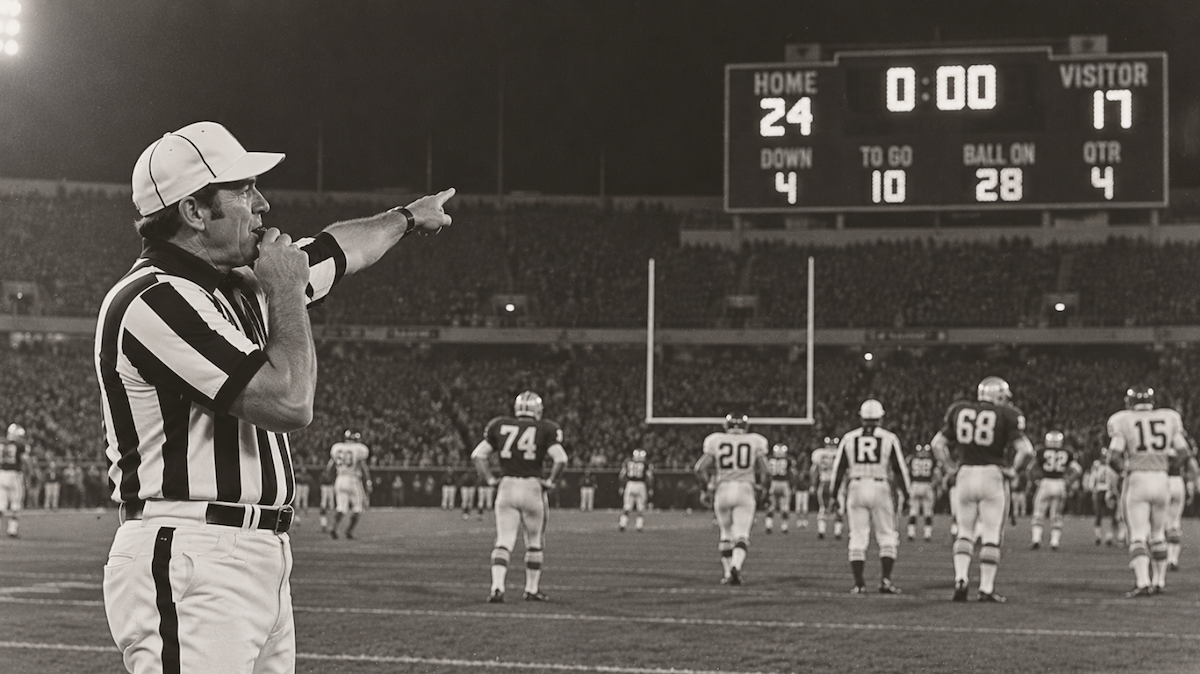
Imagine a Game With No Score
Picture a pickup game where nobody's keeping score. For the first ten minutes it's pleasant. Everyone's relaxed, nobody's arguing about the line. Then somebody hits a great shot and there's no one to credit it to. Effort drifts. The competitive edge that makes the game worth playing quietly leaks out of the gym, because without a score, "winning" is just a feeling — and feelings are easy to fake.
That's a lot of marketing departments. Busy, well-meaning, working hard. And completely unable to tell you, with a number, whether they're winning. They'll tell you the quarter "felt good." They'll point to a campaign that "got great engagement." Ask for the score and the room goes quiet.
Lacking a Score Is a Losing Venture
Let me say the rule plainly, because it's the whole point. Lacking any objective measurement of success is a losing venture. Not a risky one. A losing one. Because without a scoreboard you can't tell a good decision from a lucky one, you can't repeat what worked, and you can't kill what didn't. You're not steering — you're drifting and calling it strategy.
And here's the uncomfortable part. The absence of a scoreboard is usually a choice, even when nobody admits it. A scoreboard creates accountability. It can show a favorite campaign flopping or a beloved channel underperforming. Some teams avoid measurement not because it's hard, but because not knowing is more comfortable than knowing. That's not humility. In sports we have a word for refusing to look at the score: losing.
If you won't keep score, you've already decided you're okay with losing — you just don't want to watch it happen.
What Keeping Score Actually Requires
Keeping score is not the same as having a dashboard full of numbers. A scoreboard does two things a data dump never will: it defines what winning means before the game, and it tells you in real time whether you're ahead or behind.
So the work starts before the tools. Decide what a win is — a target for cost per acquisition, qualified pipeline, revenue from a channel, return on spend. Write the number down where the team can see it. Winners do this before they ever think about which platform to log into. The losers grab a tool first and go looking for a story it can tell them.
Put a Scoreboard Up This Week
You don't need a perfect measurement system to start keeping score. You need a clear definition of winning and an honest tally against it. Pick the one number that best represents a win for your team this quarter. Set a target for it. Track it where everyone can see it, on a cadence — weekly, not "whenever someone asks."
The moment a real score goes up on the wall, the whole team starts playing differently. Effort sharpens. Debates get settled by the number instead of the loudest voice. That's not pressure for its own sake — that's the competitive focus that only exists when the score is visible. Winners keep score because keeping score is how you find out you're winning, and how you fix it when you're not.
The Ref's Call
Clean play — and frankly the most important one on the field. Putting up an objective scoreboard and defining a win before you play is the direct answer to Rule 16, No Scoreboard. There is no flag here, only a green light: decide what winning means, post the number, and check it on a schedule. Winners keep score. Go keep yours.