


Film With Nobody in the Room
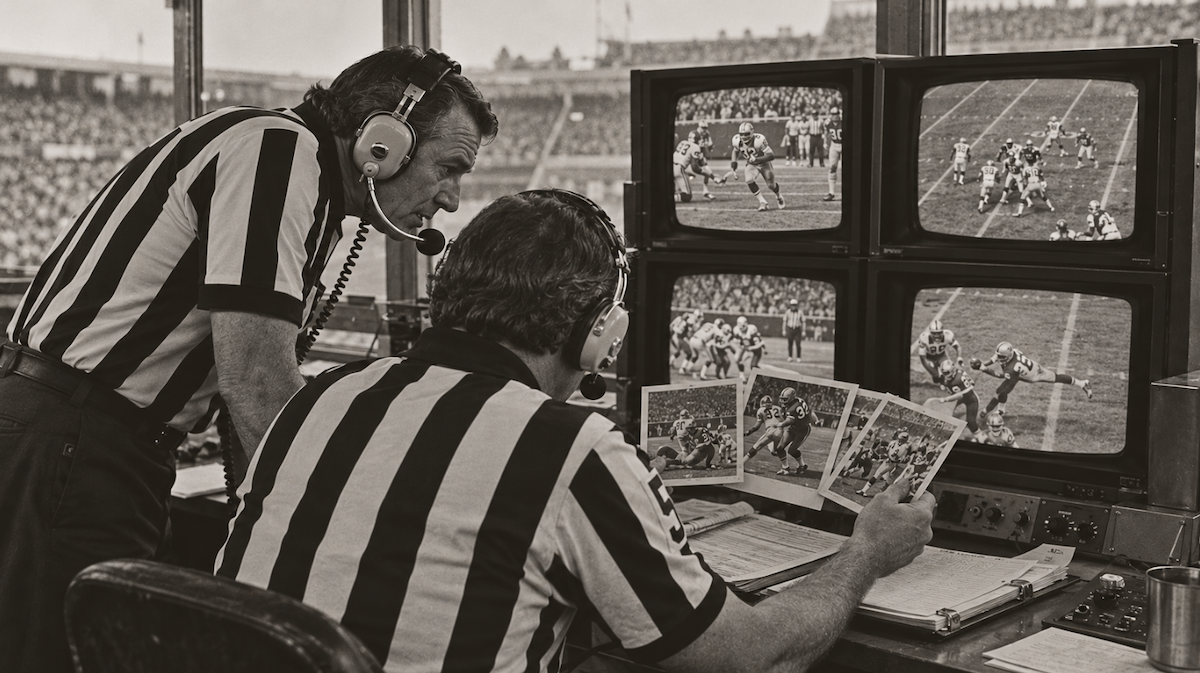
Every team films its games. Hours of it, every angle, stored neatly. But film doesn't make you better. Watching it does. A team that records everything and reviews nothing has a hard drive full of losses and no idea why they happened.
That's where a lot of marketing teams live right now. They measure everything. Every click, scroll, source, and segment, piped into dashboards that refresh on a schedule and look fantastic in the all-hands. And then nobody watches the film. The data gets collected, displayed, and quietly ignored. We've gotten very good at the easy half of the job and skipped the half that actually wins games.
The Foul: A Dashboard Nobody Owns
Throw a flag, because this is a real penalty and it's everywhere. The foul isn't measuring too much. It's measuring without an owner. A dashboard that belongs to everyone belongs to no one. It updates, it gets glanced at, and not a single person is accountable for turning what it shows into a decision.
You can spot an unowned dashboard fast. Ask a simple question — "what did we change last month because of this report?" — and watch the answer never come. The charts are pristine. The decisions are nonexistent. That's the gap between measuring and analyzing, and it's exactly where budgets quietly bleed.
Data nobody owns is just decoration that happens to be accurate.
Two Ways This Goes Wrong
The first failure is the data graveyard. Reports get built, scheduled, and forgotten. They're technically alive — refreshing every morning — but functionally dead, because no human is responsible for reading them and acting. The dashboard becomes a screensaver with good production values.
The second failure looks like the opposite but comes from the same root: analysis paralysis. Here the team does look at the data — all of it, constantly — and stares so hard at fifty metrics that no decision ever feels safe enough to make. More dimensions, more breakdowns, more "let me pull one more cut" before we commit. That's not analysis. That's hiding from a decision behind a wall of charts. Both failures end in the same place: motion, no progress. The scoreboard's lit up and the team isn't moving.
Assign an Owner, Then Analyze Less
The fix starts with a name, not a tool. Every dashboard gets one owner — a single person accountable not for the data being correct, but for a decision coming out of it on a regular cadence. Ownership is what turns a chart from a fact into an action.
Then, deliberately analyze less. Pick the few metrics that actually drive a decision and let the owner answer one question on a schedule: based on what this shows, what do we start, stop, or change? Everything that doesn't feed that question is film nobody's going to watch — so stop filming it, or at least stop pretending it counts as analysis. Measuring everything is fine. Just make sure a human being is responsible for turning a small, sharp slice of it into a move.
The Ref's Call
Yellow flag on the play. Collecting mountains of data with no one accountable for reading it is a textbook Rule 20 foul, Dashboards Without Owners. It won't get you ejected, but it wastes the whole point of measurement and breeds analysis paralysis on the side. Put one name on every dashboard, tie it to a recurring decision, and analyze less on purpose. Assign the owner and play on.